
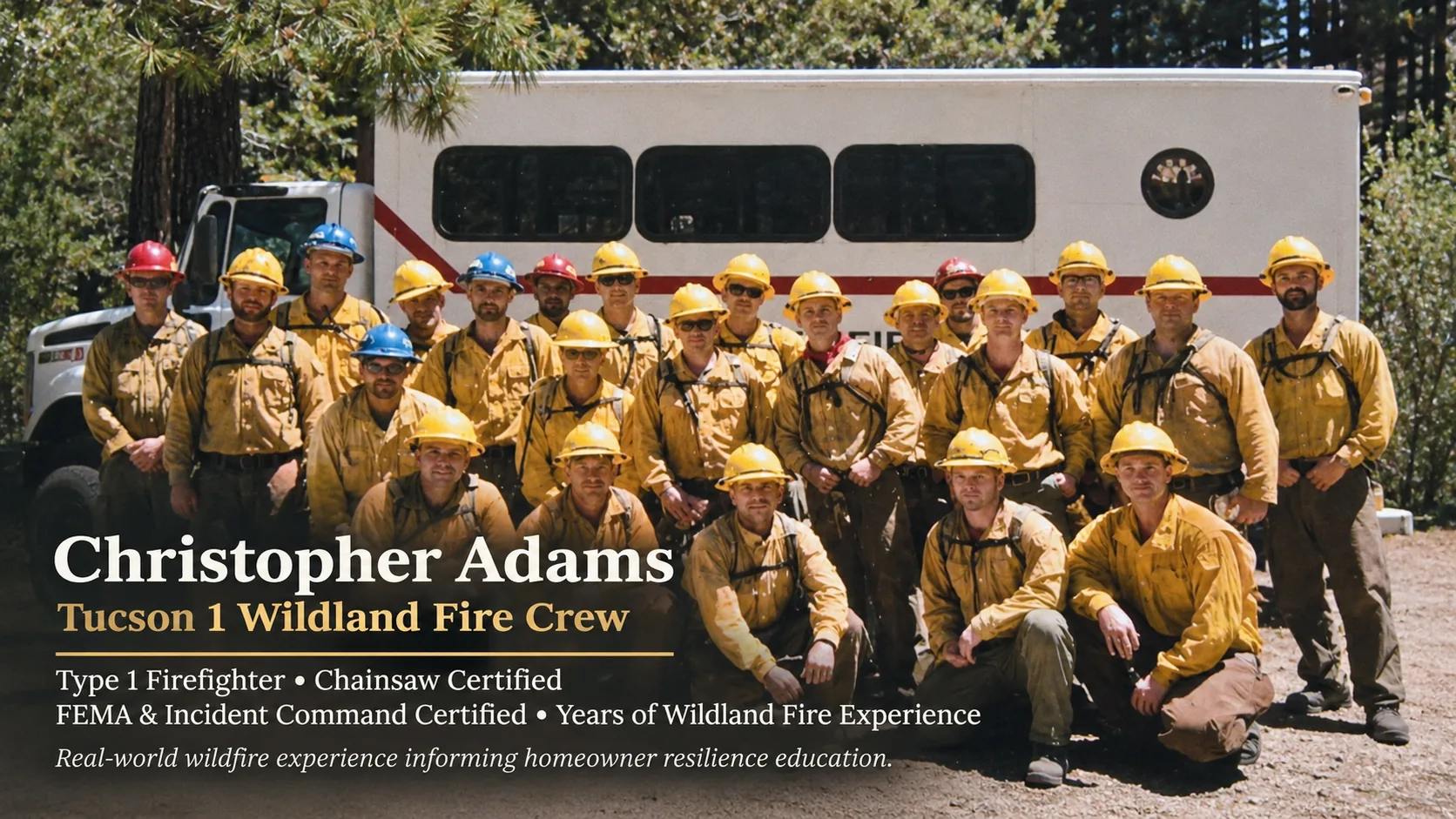
Christopher Adams — Tucson 1 Wildland Fire Crew
Christopher Adams contributes to Prescott’s Best Construction’s research, technology and homeowner education. His background includes years of wildland-fire experience with Tucson 1 Wildland Fire Crew, Type 1 firefighter experience, chainsaw certification, and FEMA and Incident Command System training.
That field perspective helps shape practical homeowner questions. It does not replace a qualified building assessment, a local fire-department determination or the appropriate licensed contractor for specialized work.
Two kinds of preparation work together
Defensible space
Reduce combustible vegetation, pine needles and stored materials around the home. Arizona Forestry highlights the immediate 0–5-foot area, the surrounding yard and the importance of keeping roofs, gutters, porches and decks free of debris.
Home hardening
Examine building features where windblown embers or heat can create problems: vents, roofing details, openings, eaves, fences and attached decks. Appropriate construction choices may reduce vulnerabilities; no retrofit makes a home fireproof.
Features worth examining during an exterior renovation
- Roof and gutters: review debris, roof condition and openings at roof edges. Roofing work should be evaluated by the appropriately licensed specialist.
- Attic, soffit and crawlspace vents: ask whether proposed components resist ember entry while preserving required ventilation.
- Eaves, siding and trim: look for exposed gaps and combustible materials when planning exterior work.
- Decks and fences: consider debris under or against decks and combustible fencing directly connected to the house.
- Windows and exterior doors: review materials and openings as part of a broader renovation rather than assuming one product eliminates wildfire risk.
Requirements depend on the exact property, scope and jurisdiction. City of Prescott, Prescott Valley and unincorporated Yavapai County rules are not interchangeable.
What our remodeling team can help you plan
If you are already discussing exterior carpentry, a deck, doors, trim or another eligible renovation, ask us to identify design questions and materials to investigate. We can discuss a project-specific construction scope and coordinate with properly licensed specialists as needed. Availability, insurance and Arizona ROC license scope must be confirmed before a service is offered or contracted.
Public fire-department risk assessments and independent Firewise programs differ from a paid construction estimate. We do not offer an official wildfire designation, guarantee insurance discounts or promise a home will survive a wildfire.
Trusted homeowner resources
Start with guidance from organizations responsible for wildfire education and current technical standards.